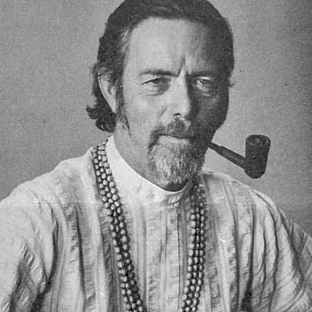
Embracing Freedom Beyond Convention
Alan Watts invites us to reconsider our relationship with societal norms through his profound assertion: "To be free from convention is not to spurn it but not to be deceived by it." This statement challenges us to navigate the delicate balance between conformity and authenticity. In a world often dictated by external expectations, Watts encourages a discerning freedom that allows us to engage with conventions without being ensnared by them. This exploration is not merely philosophical; it is a call to cultivate a deeper wisdom that recognizes the value of both tradition and personal insight.
Watts's words resonate deeply in our contemporary landscape, where the pressure to conform can feel overwhelming. The essence of his teaching lies in the understanding that true freedom does not equate to rebellion for its own sake. Instead, it is about seeing through the illusions that conventions can create, allowing us to act with clarity and purpose. This nuanced perspective invites us to engage with the world authentically, fostering a sense of liberation that is rooted in awareness rather than mere rejection.
The image / the metaphor
At the heart of Watts's quote is a striking image of clarity amidst the fog of societal expectations. The verbs "spurn" and "deceived" evoke a sense of active engagement with the world around us. To spurn convention suggests a rejection that can often lead to isolation or extremism, while to be deceived by it implies a lack of awareness that can trap us in unexamined patterns. Watts encourages us to adopt a stance of observation, where we can appreciate the role of conventions without allowing them to dictate our choices.
Diving deeper into the metaphor, we find that Watts is not advocating for a life devoid of structure or tradition. Instead, he highlights the importance of discernment—an ability to see conventions for what they are: tools that can either serve us or bind us. This perspective invites us to engage with conventions as a form of art, where we can choose to participate in the dance of societal norms while remaining grounded in our own truth. In this way, freedom becomes a conscious choice rather than a reactionary stance.
In the speaker's tradition
Alan Watts's insights are deeply rooted in Zen philosophy, which emphasizes the importance of direct experience and the nature of reality. Concepts such as *sunyata* (emptiness) and *prajna* (wisdom) resonate with his assertion, as they encourage us to see beyond the superficial layers of existence. In Zen, the understanding of emptiness allows us to recognize that conventions are not inherently good or bad; they simply are. This realization fosters a sense of freedom that is not bound by rigid definitions but is fluid and adaptable.
In his work, Watts often draws upon the teachings of the *Tao Te Ching*, where the idea of *wu wei* (non-action) complements his message. This principle teaches us to align with the natural flow of life rather than resist it. By understanding conventions as part of this flow, we can navigate them with grace and intention, embodying the wisdom that comes from both acceptance and discernment. The interplay between freedom and convention thus becomes a dynamic dance, one that invites us to engage fully with the world while remaining anchored in our authentic selves.
Living the teaching
Consider a modern scenario where this teaching can be applied: the workplace. Many individuals feel pressured to conform to corporate culture, often sacrificing their authenticity for the sake of acceptance. Watts's perspective encourages us to engage with workplace conventions—such as dress codes or communication styles—without losing our individuality. By recognizing these conventions as tools rather than mandates, we can navigate our professional environments with a sense of freedom that allows us to express our true selves while still functioning within the collective.
In personal relationships, this teaching can manifest in how we approach communication and expectations. Often, we may feel compelled to adhere to societal norms regarding how we should behave or express our feelings. Watts's wisdom invites us to engage with these conventions thoughtfully, allowing us to communicate authentically without being bound by the fear of judgment. This approach fosters deeper connections, as we learn to honor both our own truth and the shared conventions that can enrich our interactions.
A reflection
As we reflect on Watts's profound insight, we are invited to consider: In what areas of my life am I allowing conventions to dictate my choices, and how might I cultivate a deeper awareness that allows me to engage with them freely? This question encourages a contemplative exploration of our relationship with societal norms, inviting us to discern where we might be deceived and where we can embrace the wisdom of both tradition and authenticity.



Join the BrightStar Community
Stay connected with daily inspiration, event announcements, and community wisdom