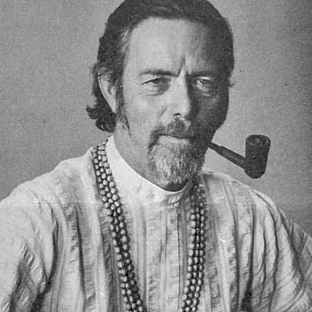
The Depth of Sleep: Contemplating the Final Awakening
Alan Watts invites us to ponder a profound and unsettling thought: the experience of going to sleep and never waking up. This contemplation of death, framed as a transition rather than an end, challenges our conventional understanding of existence. It urges us to confront the reality of mortality, not as a fearsome specter, but as an integral part of the human experience that can lead to deeper understanding and acceptance. In a world that often shies away from discussions of death, Watts's words beckon us to engage with this ultimate mystery.
By encouraging us to imagine this final sleep, Watts opens a doorway to a transformative contemplation. It is not merely about the cessation of life but about the nature of consciousness itself. What does it mean to truly "wake up" in our lives? This quote serves as a catalyst for introspection, prompting us to examine how we live, how we relate to our own existence, and how we might embrace the impermanence that defines our journey. In doing so, we may find that the fear of death can be replaced with a profound appreciation for life.
The image / the metaphor
The imagery of sleep in Watts's quote evokes a sense of surrender and tranquility, contrasting sharply with the anxiety often associated with death. Sleep is a state of rest, a temporary retreat from the chaos of waking life, and in this metaphor, it becomes a powerful symbol of the unknown. The verbs "go" and "wake" suggest a journey and a transition, inviting us to consider what lies beyond our current understanding. The felt sense of this imagery is one of both peace and uncertainty, as it encapsulates the dual nature of existence—our desire for continuity and our inevitable encounter with the unknown.
In the speaker's tradition
Alan Watts, a prominent figure in the popularization of Eastern philosophy in the West, draws heavily from Zen Buddhism, which emphasizes the impermanence of life and the importance of living in the present moment. Concepts such as sunyata (emptiness) and prajna (wisdom) resonate deeply within this contemplation of death. In Zen, the acceptance of death is not seen as a tragic end but as a natural part of the cycle of life, encouraging practitioners to cultivate a sense of detachment and awareness. This perspective aligns with Watts's invitation to embrace the idea of sleep as a metaphor for our ultimate return to the cosmos.
In his work, Watts often references the idea of kenosis, or self-emptying, which parallels the notion of surrendering to the inevitability of death. This surrender is not a defeat but a profound acceptance that allows for a deeper connection to the present moment. The Zen text "The Heart Sutra" encapsulates this idea beautifully, stating that form is emptiness and emptiness is form, suggesting that life and death are intertwined in a continuous dance. Watts's contemplation of sleep and death invites us to explore this intricate relationship, encouraging us to find peace in the acceptance of our transient nature.
Living the teaching
Consider a modern scenario where the contemplation of death can profoundly impact our lives: a loved one receiving a terminal diagnosis. In this moment, the weight of mortality becomes palpable, prompting a reevaluation of priorities and relationships. The fear of loss can lead to deeper connections, as conversations shift from trivial matters to the essence of what truly matters. By embracing the reality of death, we can cultivate a sense of urgency to express love, gratitude, and understanding, transforming our interactions into meaningful exchanges that honor the fragility of life.
Another application of this teaching can be found in the daily practice of mindfulness. As we navigate the complexities of our routines, the idea of sleep as a metaphor for death can serve as a reminder to live fully in each moment. When faced with challenges or conflicts, we can ask ourselves how we might approach the situation if we were to embrace the impermanence of our circumstances. This perspective encourages us to let go of attachments and judgments, fostering a sense of peace and acceptance that permeates our relationships and daily experiences.
A reflection
As we contemplate Watts's invitation to imagine going to sleep and never waking up, we are left with a profound question: How might our lives change if we fully embraced the reality of our mortality? This question invites us to reflect on our values, our relationships, and our aspirations. In the stillness of contemplation, we may discover that the acceptance of death can illuminate the beauty of life, urging us to live with intention and authenticity.



Join the BrightStar Community
Stay connected with daily inspiration, event announcements, and community wisdom